
Home
Experiences
Platform
Partners
Company
Design & Manufacturing
Investors
Partner with us
AVEX: AUTONOMOUS VEHICLES EXPERIENCES
Every AVEX module is designed twice, once for the guest, once for the road. A hospitality studio in San Francisco, an engineering lab and assembly line in Detroit, and one rule between them: nothing ships that hasn't survived both.
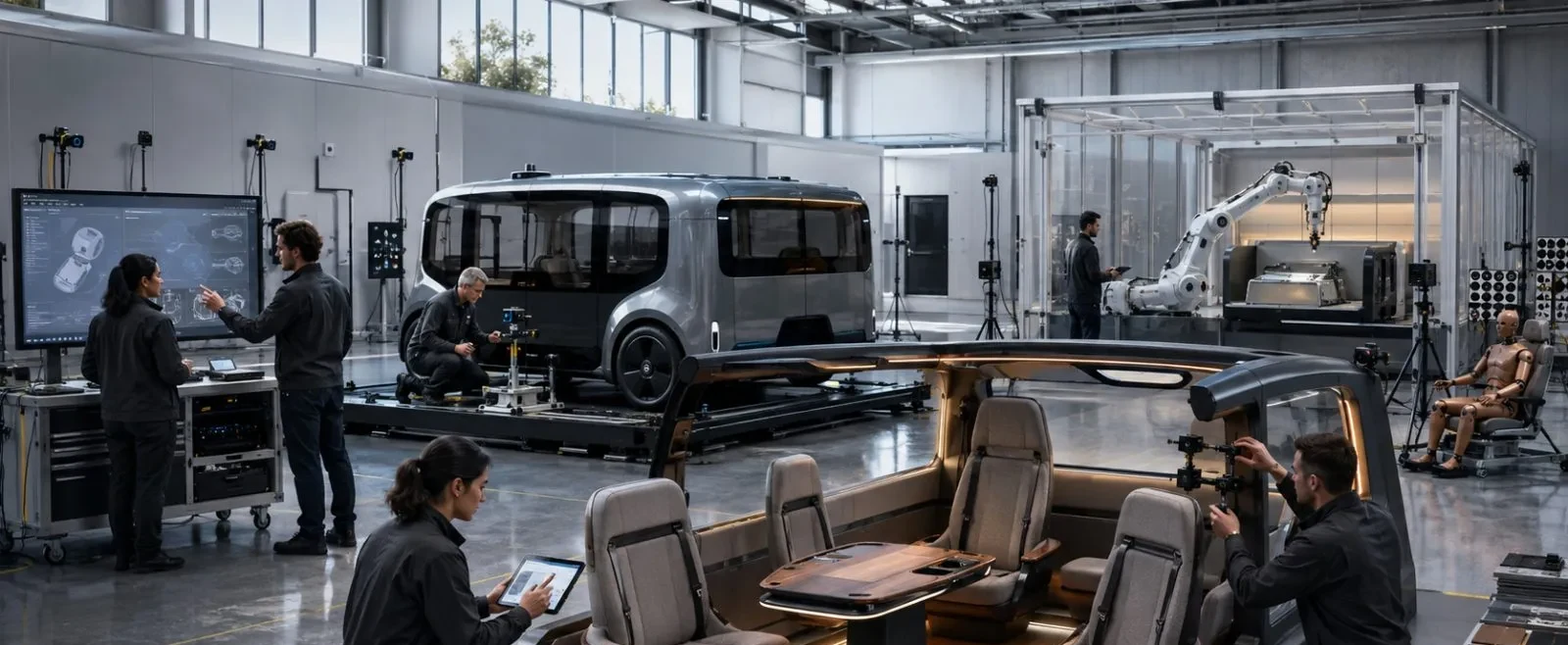
Interior architects and service designers from hotels, cruise lines, and aircraft cabins. Full-scale foam-and-timber mockups within six weeks of a sketch; every layout tested with real guests, real glassware, real sleep.
Crash, vibration, thermal, and acoustic validation on every configuration. Sled tests for each seating position, twenty-two material burn tests per interior, and a photogrammetry rig that checks build against CAD to the millimeter.
Modules assemble like aircraft galleys: a bonded aluminum frame, pre-wired systems spine, then trades fit-out, joinery, upholstery, glass, on a moving line. One module every four days per cell, today.
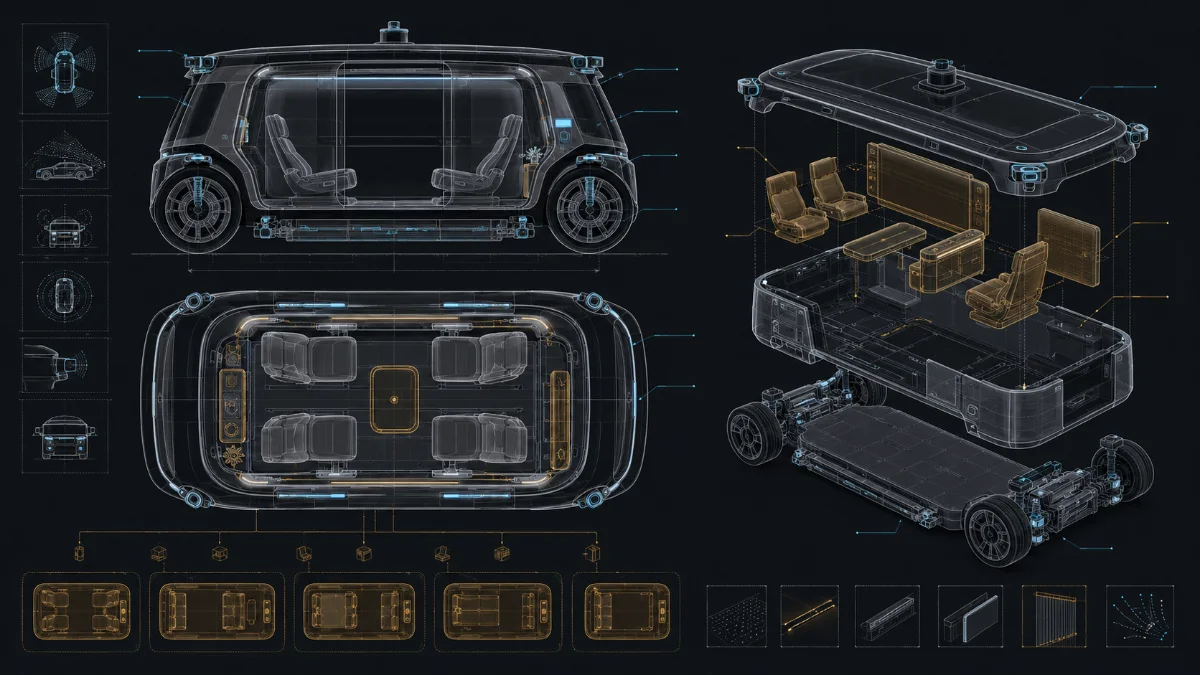
The cabin sits inside the OEM's sensor envelope, nothing AVEX adds touches the driving stack's sightlines.
Power, water, data, and HVAC run one keel channel with a single blind-mate connector set at the module interface.
Isolation mounts, mass-loaded acoustic barrier, and underfloor stores between the battery deck and the guest.
Full-scale cabin in foam and timber. Guests eat, sleep, and pour in it before a single panel is tooled.
Structure, restraints, and systems designed to federal standards; every material burn-tested and logged.
Sled, shaker, thermal soak, and 40,000 corridor miles on the mule fleet before certification review.
Serialized production with hospitality QA, a hotel inspector signs off every cabin beside the vehicle inspector.
Designing and building AV experiences.